EV Home Backup: How Safe Islanding Works in the UK
EV home backup needs more than a large car battery. To keep household circuits running during a power cut, the complete installation must safely separate from the public grid and establish a controlled local electricity supply. That is known as intentional islanding.
This practical guide complements our article asking whether bidirectional EV charging should be mandatory. That article makes the policy case; this one explains the equipment, operating stages and questions to discuss with a competent installer.
The diagrams show functions and energy flows, not wiring instructions. Earthing, neutral switching, protection, interlocks and the actual connection arrangement require professional design and verification.
Why preparedness is bringing home backup into focus
The Cabinet Office launched updated Be Ready household preparedness advice on 22 October 2026, encouraging people to prepare for temporary disruption to everyday services. Its guidance includes planning for three days of disruption and simple, low-cost steps.
That greater focus on resilience could increase interest in home backup systems, particularly where households already own an EV or solar panels. This is our assessment of a possible direction of demand, rather than evidence that the campaign has already increased installations.
The government's power-cut guidance says the UK electricity system is resilient and most outages are short and local. A backup installation is one possible layer of preparation alongside torches, charged power banks, written contact details and an appropriate household plan.
What is islanding, and why do ordinary inverters stop?
In normal operation, your home and any approved local generation remain connected to the electricity network. During an outage, ordinary grid-connected inverters generally stop supplying power to avoid energising a network that should be dead.
Anti-islanding protection prevents an unintended island. Intentional islanding creates a deliberately separated, controlled backup supply. Disabling protection is not a substitute for installing a proper backup system. The US national laboratory's explanation of intentional islands describes the distinction and the stages of transfer into and out of island operation.
Within the separated area, a suitable source must establish and regulate voltage and frequency. This is often called grid-forming operation. Being able to export electricity while the grid is present does not establish that a car, charger or inverter can perform this function during a blackout.

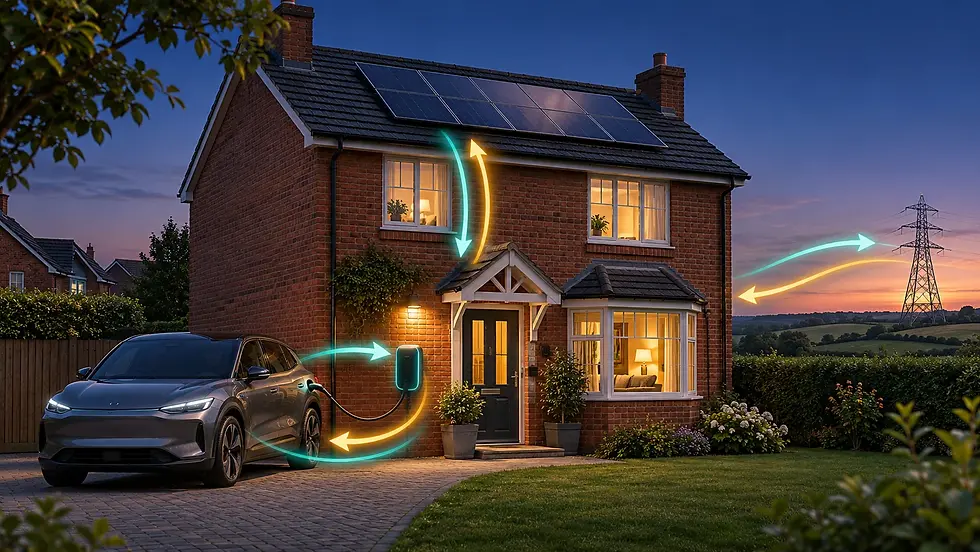
Diagram 1: normal operation and islanded backup. In the outage example, the isolation boundary is open and energy remains within the backed-up installation. The public network receives no electricity from the local sources.
V2L, V2H and V2G: which one provides home backup?
V2L, vehicle-to-load: runs suitable individual appliances through an approved outlet or adaptor. It does not by itself authorise a connection to household wiring.
V2H, vehicle-to-home: supplies household circuits through compatible equipment. Confirm whether the particular system supports outages, rather than only reducing grid imports while the mains is available.
V2G, vehicle-to-grid: exports to the public network through an approved installation and commercial service. It does not automatically include an independent backup supply.
Check the exact vehicle, model year, software, charger and home equipment as a complete combination. Use our UK EV compatibility guide as a starting point, then obtain written confirmation from the manufacturers and installer.
What equipment does EV home backup need?
The necessary functions may be combined in a gateway, inverter or integrated backup package. They are not necessarily separate products:
A suitable energy source: an approved bidirectional EV, a stationary battery or another compatible source, with clear warranty terms.
Power conversion and backup controls: equipment capable of supplying the intended local system without the public grid.
Approved isolation and changeover: a designed arrangement that separates the backed-up installation and controls transfer between operating modes.
Appropriate distribution and protection: selected circuits or a designed whole-home arrangement, with protection verified for backup operation.
Energy management: monitoring, load priorities, reserve settings and coordination of connected sources.
A verified installation: the applicable network process, electrical certification, commissioning records and clear operating instructions.
The IET's July 2026 island-mode guidance explains why switching, earthing and fault protection need particular attention. An inverter's fault-current behaviour can differ substantially from the public network, so existing protection cannot simply be assumed to work identically.
Switching off a main switch is not, on its own, a complete backup design. Never feed a house through an ordinary socket or improvise neutral or earth connections.
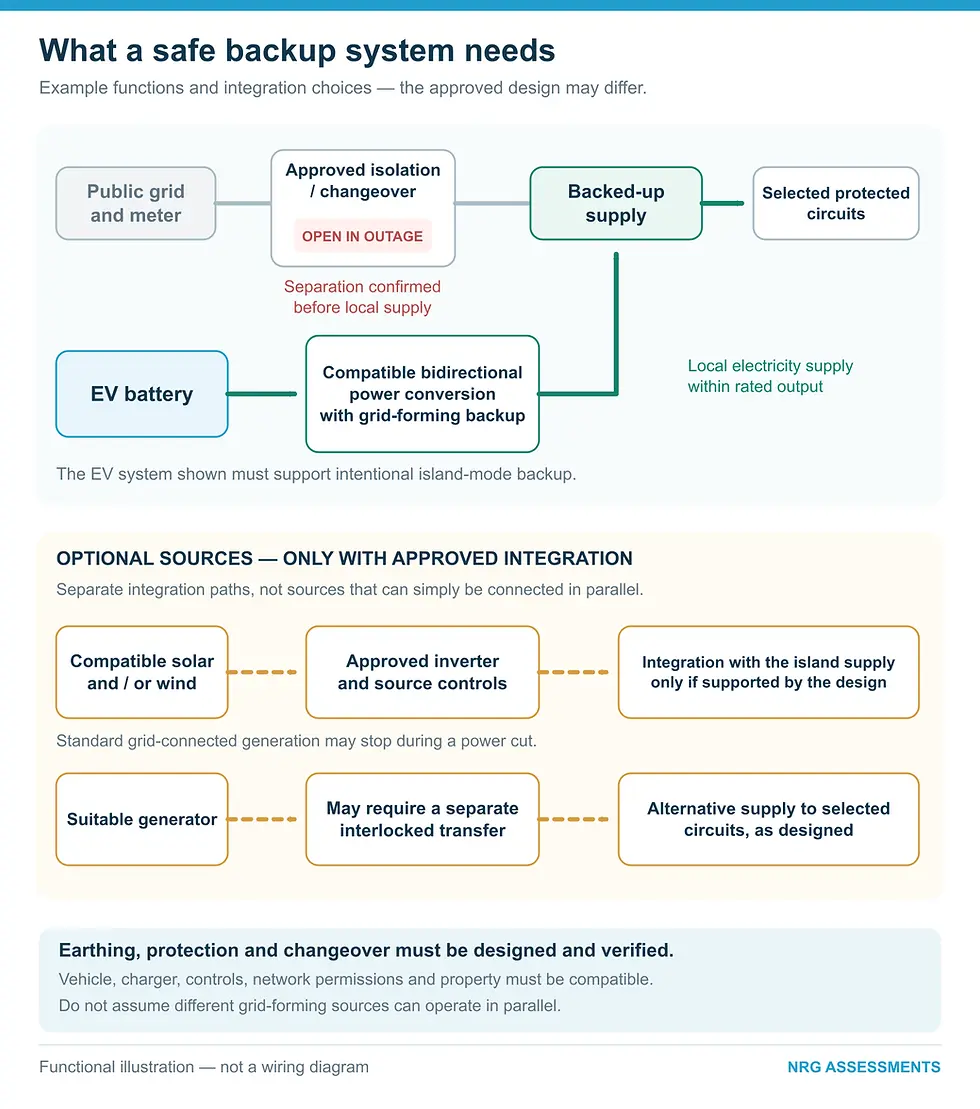
Diagram 2: the functions and optional sources. All backed-up sources and loads remain on the protected side of the isolation boundary. Optional equipment requires an approved integration design; a generator may use a separate interlocked transfer arrangement.
Can an EV, solar, wind, a battery and a generator work together?
Yes, a suitably engineered local energy system can coordinate several sources. For example, Victron's energy-storage documentation describes solar, battery, grid and generator functions within a designed system. That does not mean every EV backup package accepts every generator, solar inverter or wind turbine, or that they can all run in parallel.
Solar panels
Compatible solar equipment may supply daytime loads and recharge storage during an outage. The controller must also deal with excess generation when demand is low and batteries are full. Tesla's UK outage guidance illustrates how a compatible battery-and-solar system manages backup energy and solar output. It is an example of system behaviour, not confirmation that an existing solar installation works with a particular EV.
Small wind generation
Wind could contribute through compatible generation and control equipment, where the site, permissions and economics make it appropriate. Bornay's turbine and controller information illustrates the dedicated control equipment involved. Wind remains weather-dependent. Ask how the proposed system controls turbine output when the battery is full, loads fall or the backup system shuts down.
A stationary home battery
A fixed battery can provide a reserve when the car is away. Some designs use it to establish the local supply while other approved sources contribute. Adding a car to an existing battery installation still requires compatibility checks; two independent inverters must not be assumed to share control automatically.
A generator
An appropriately integrated generator can provide another source during prolonged poor weather or low battery charge. Depending on the design, it may feed selected circuits through a changeover arrangement, or supply an approved inverter-charger that supports loads and recharges a stationary battery.
The installer must confirm generator compatibility, source priorities and protection against unintended backfeed. Some systems transfer between sources; others support coordinated operation under specific controls. A generator input is not permission to connect unrelated generating equipment together.
Fuel-burning generators must be used outdoors, safely away from doors, windows and ventilation openings, following the manufacturer's instructions. They must never run in a house, garage or other enclosed or partially enclosed space. Exhaust gases can cause fatal carbon monoxide poisoning. Follow the Health and Safety Executive for Northern Ireland's generator safety guidance, including suitable carbon monoxide alarms. Fuel storage, fire precautions, noise and safe refuelling also need planning.
Working in harmony means the controls manage available generation, household demand, battery reserves and safe source transfer. It does not mean combining the headline output of every device and assuming it will all be available.
What happens when the power goes off?
A typical automatic arrangement detects abnormal mains conditions, stops inappropriate grid interaction, separates the backup installation and establishes its local supply. It then supplies the approved loads within its limits. When mains electricity returns, it checks conditions and transfers back in accordance with the system design.
The exact sequence and interruption depend on the equipment. A manual changeover system has different operating instructions. Ordinary backup must not be treated as a guaranteed uninterrupted power supply.
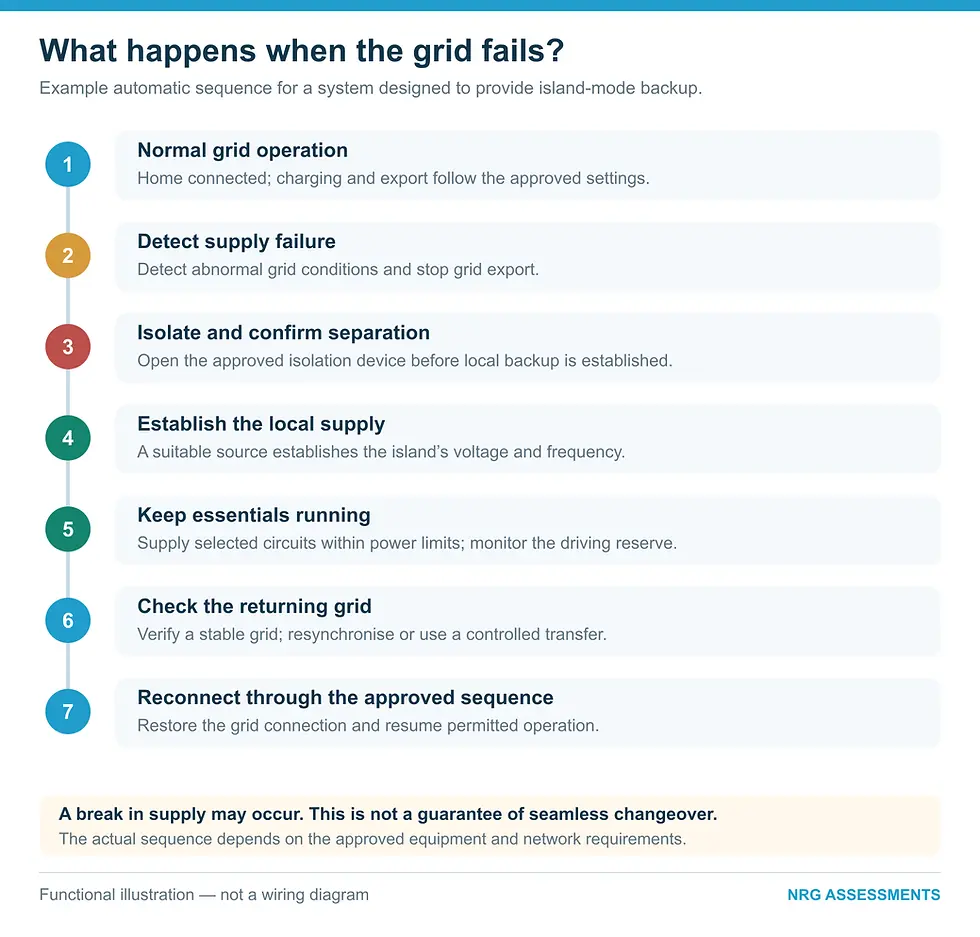
Diagram 3: an example automatic transfer sequence. The diagram explains the control stages, without prescribing switching timings or a universal installation method.
Ask whether the system can start if the mains has already failed. This is often called black start. It may need stored reserve energy or separate control power. Also establish what happens if the vehicle is unplugged, the battery reaches its minimum charge, communications fail or the backup system shuts down overnight.
Choose the loads before choosing the battery
Start with the circuits that matter: suitable lighting, refrigeration, communications and compatible heating controls, for example. An internet connection may still fail if the external network loses power. Gas boilers generally need electricity, while electric space heating and hot water can consume substantial backup energy.
kWh measures stored energy; kW measures the rate of supply. A system with a 3 kW continuous output cannot support a 2 kW kettle and a 2 kW heater together simply because its battery has plenty of charge. Starting demands and short-term overload limits also matter.
For illustration, a 60 kWh usable EV battery at 80% charge, with a 40% driving reserve, offers 24 kWh before losses. At an assumed 90% delivery efficiency, that is 21.6 kWh. At an assumed 8 kWh of essential demand a day, the arithmetic gives about 2.7 days.
This is an energy example, not a runtime guarantee. Actual discharge limits, temperatures, standby consumption and the connected equipment change the result. Solar or wind may extend operation when conditions allow; neither is a guaranteed supply.
Check which phases and circuits remain live, especially in a three-phase property. Life-support equipment and other critical loads need their own specialist continuity plan.
UK network requirements: G98, G99 and G100
Your distribution network operator, or DNO, handles the local network connection. The correct route depends on the equipment and the complete installation, including existing generation and storage.
National Grid Electricity Distribution's G99 guidance explains the routes for equipment outside the scope of G98. Some qualifying smaller installations use notification, while others need an application and acceptance before connection. The installer should establish the applicable route before work begins.
G100 export limitation controls how much electricity is exported while connected to the grid. A zero-export setting is not electrical isolation and does not create outage backup. Grid-connection compliance and safe island operation are separate parts of the overall design.
How to get a system installed
Define the objective: appliance power, selected-circuit backup, whole-home backup or grid services; specify the outage duration and driving reserve you want to plan for.
Arrange a site assessment: review the existing supply, circuits, solar equipment, available space and practical equipment locations.
Obtain a written design and compatibility statement: identify supported sources, backup output, transfer interruption, black-start behaviour and warranty conditions.
Resolve the network and installation requirements: confirm the relevant application or notification, permissions and professional installation responsibilities.
Commission and hand over: demonstrate the intended backup functions, verify protection in the relevant modes and provide certificates, operating instructions and a maintenance plan.
Request an itemised quotation covering equipment, changeover arrangements, any distribution-board work, network requirements, commissioning and ongoing charges. Buying a compatible car alone does not fund or complete the home installation.
Questions to ask before you commit
Does this exact car, charger and home combination support power-cut backup?
Which circuits and phases remain supplied, and what can run simultaneously?
What happens when the car leaves, stored energy runs low or communications fail?
Can it start with no mains supply, and can compatible generation recharge storage during the outage?
Which optional sources are approved, and do they operate together or through controlled transfer?
What driving reserve and charging deadlines can I set?
What network paperwork, certificates, test records and maintenance instructions will I receive?
Continue the NRG EV and energy series
Should bidirectional EV charging be mandatory? — the case for government-led standards and driver control.
Which electric cars can power your home? — vehicle compatibility and the different capabilities to check.
Could your electric car power your home during a power cut? — the wider emergency-power question.
Understanding how a building uses energy is a useful starting point for improving its performance. NRG Assessments provides domestic EPC assessments and commercial EPC assessments. Contact NRG about your property's assessment requirements.
Sources checked on 16 November 2026. This is a homeowner planning guide, not a wiring diagram or a substitute for a site-specific electrical design. Product capabilities and connection requirements must be confirmed for the proposed installation.